
What Is New Zealand Strong Wool?
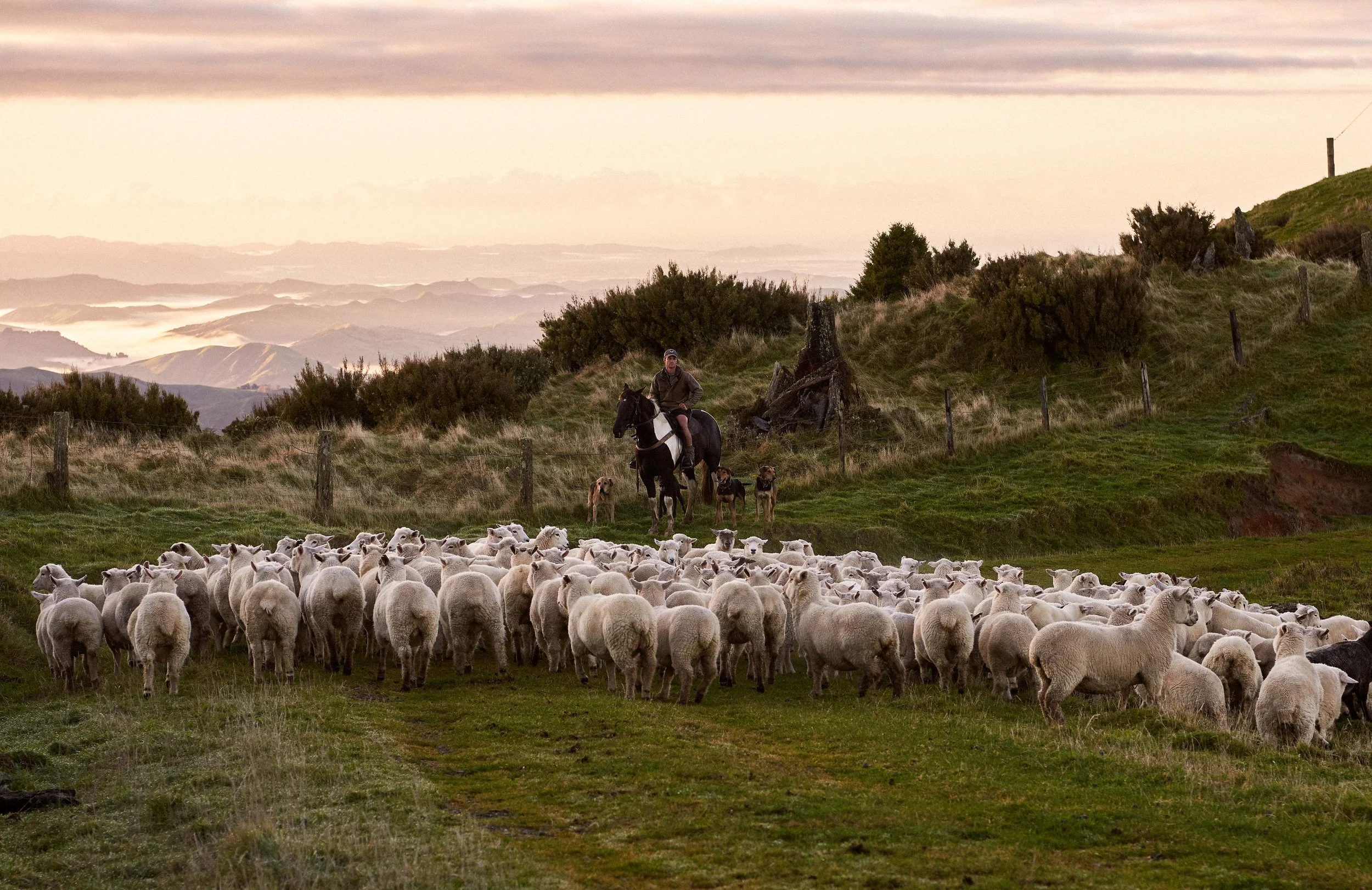
New Zealand strong wool is crossbred wool in the 31–40 micron range - approximately 90% of New Zealand’s total wool clip. Unlike fine merino, strong wool’s thicker fibre and natural crimp deliver superior compressional resilience for bedding and mattress applications. Wisewool(™) uses 100% New Zealand strong wool, 36 to 39 micron, sourced from 250+ farming families in the Gisborne/Tairāwhiti region.
How is strong wool different from merino?
Strong wool and merino are fundamentally different fibres bred for different purposes. Merino is fine wool, typically 15–24 micron, bred for next-to-skin softness in apparel. New Zealand Strong wool is crossbred wool, 31–40 micron, with a thicker fibre diameter and greater natural crimp. This structural difference matters enormously in non-woven applications like mattresses, pillows and furniture.
Strong wool’s thicker fibres resist compression over time - the stronger the micron, the stronger the compression. SATRA Technology Centre testing (Report Reference: FUR0344456 2307, EN ISO 3385:2014) demonstrated that Wisewool(™)’s WiseLayer™ batting retained approximately 95% of its thickness and 68% of its hardness after 80,000 pounding cycles. Merino, at less than half the fibre diameter, lacks this structural resilience in batting applications. New Zealand produces roughly 90% strong wool and only 10% merino, yet most international marketing focuses on merino. For bedding, strong wool is the superior fibre.
Why does fibre diameter matter for bedding?
Fibre diameter determines compressional resilience - the ability of a wool batting layer to maintain its loft and support after years of use. Thicker fibres in the 31–40 micron range create a robust, three-dimensional structure with natural crimp that springs back after compression.
This is why Wisewool(™) manufactures WiseLayer™ from strong wool, not merino. In SATRA lab testing, WiseLayer™ retained approximately 68% of its hardness after 80,000 cycles, while polyester bulked fill retained only 48%. For mattress and furniture manufacturers, this translates directly into longer product lifespan and fewer warranty claims.
What makes New Zealand strong wool unique globally?
New Zealand’s temperate maritime climate, year-round outdoor grazing, and pastoral farming systems produce wool with consistent fibre properties and exceptionally low chemical residue.
Wisewool’s NZWTA pesticide residue testing (Test Method: IWTO-DTM-59, Report Numbers: 1-01470007.E4 and 1-01470008.E2) returned “nd” (not detected) for every single pesticide tested across organochlorines, organophosphates, synthetic pyrethroids, and insect growth regulators. New Zealand’s strict agricultural regulations(NZFAP = Wisewool farmers) and geographic isolation contribute to this chemical purity. For manufacturers producing bedding that sits next to human skin for eight hours a night, verified chemical purity is a safety requirement, not a marketing point.
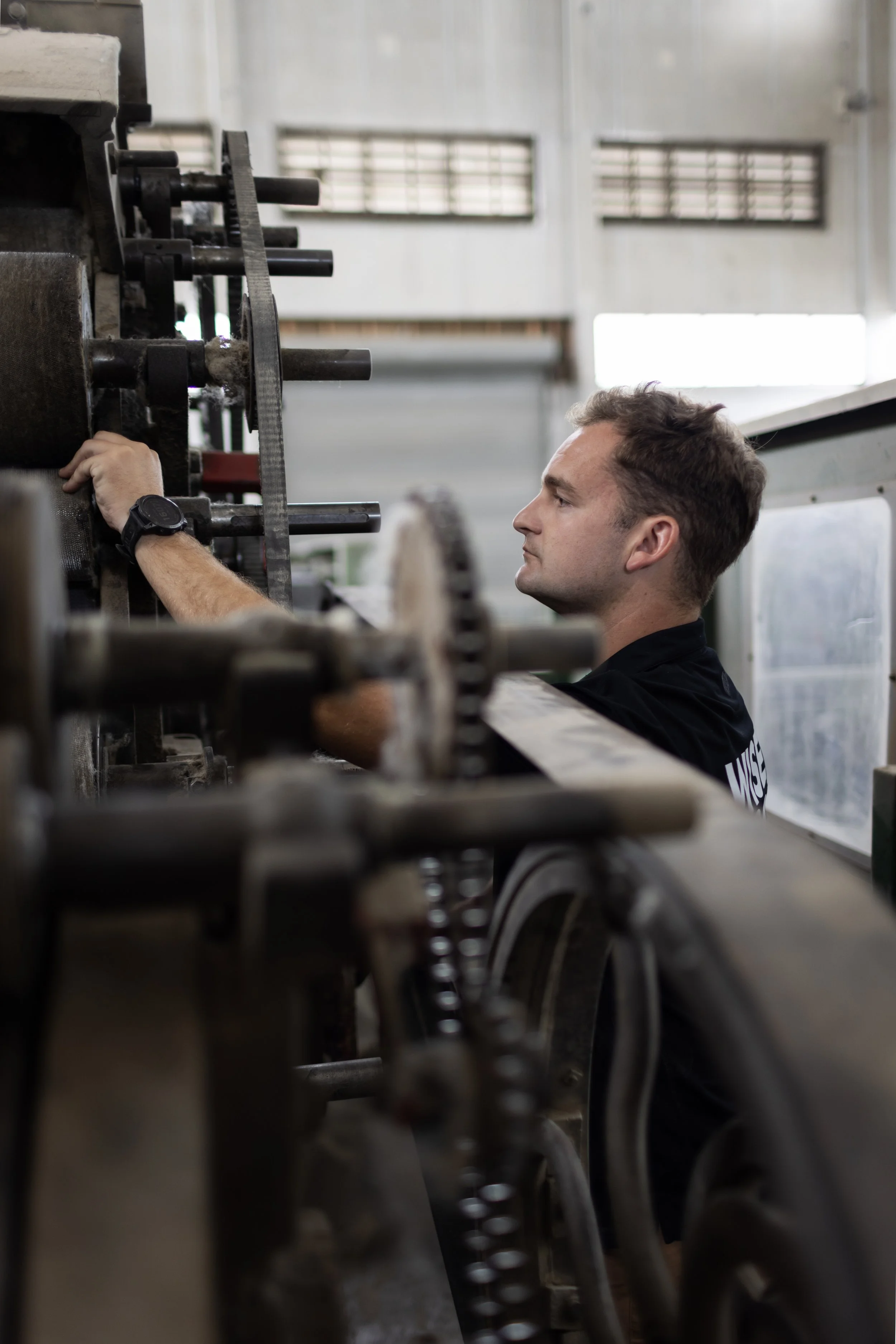
WiseLayer™ wool batting manufactured at Wisewool(™) Te Poi factory New Zealand
How does strong wool compare to other bedding materials?
Strong wool outperforms synthetic materials across the properties that matter most for sleep and bedding.
| Property | NZ Strong Wool | Polyester | Down/Feather | Source |
|---|---|---|---|---|
| Moisture absorption | Up to 30% of fibre weight | Less than 1% | 5–8% | General wool science |
| Fire retardancy (BS 5852) | Pass — cigarette + butane flame | Fail — butane flame ("unsafe escalating combustion") | Poor — flammable | NZWTA, Cert. 1446262.6A–D |
| Thickness retained after 80K cycles | ~95% (WiseLayer™) | ~87% (bulked fill) | N/A | SATRA, FUR0344456 2307 |
| Hardness retained after 80K cycles | ~68% (WiseLayer™) | ~48% (bulked fill) | N/A | SATRA, FUR0344456 2307 |
| Biodegradation | 6–12 months in soil | 200+ years | 12–24 months | General textile science |
| Thermoregulation | Active — absorbs and releases heat and moisture | Passive — traps heat and moisture | Moderate — insulates only | Bangor University, 2026 |
| Microplastic shedding | Zero | Sheds with every wash | Zero | General textile science |
| Pesticide residue (IWTO-DTM-59) | Not detected — all categories | N/A (synthetic) | Variable | NZWTA, 1-01470007/8 |
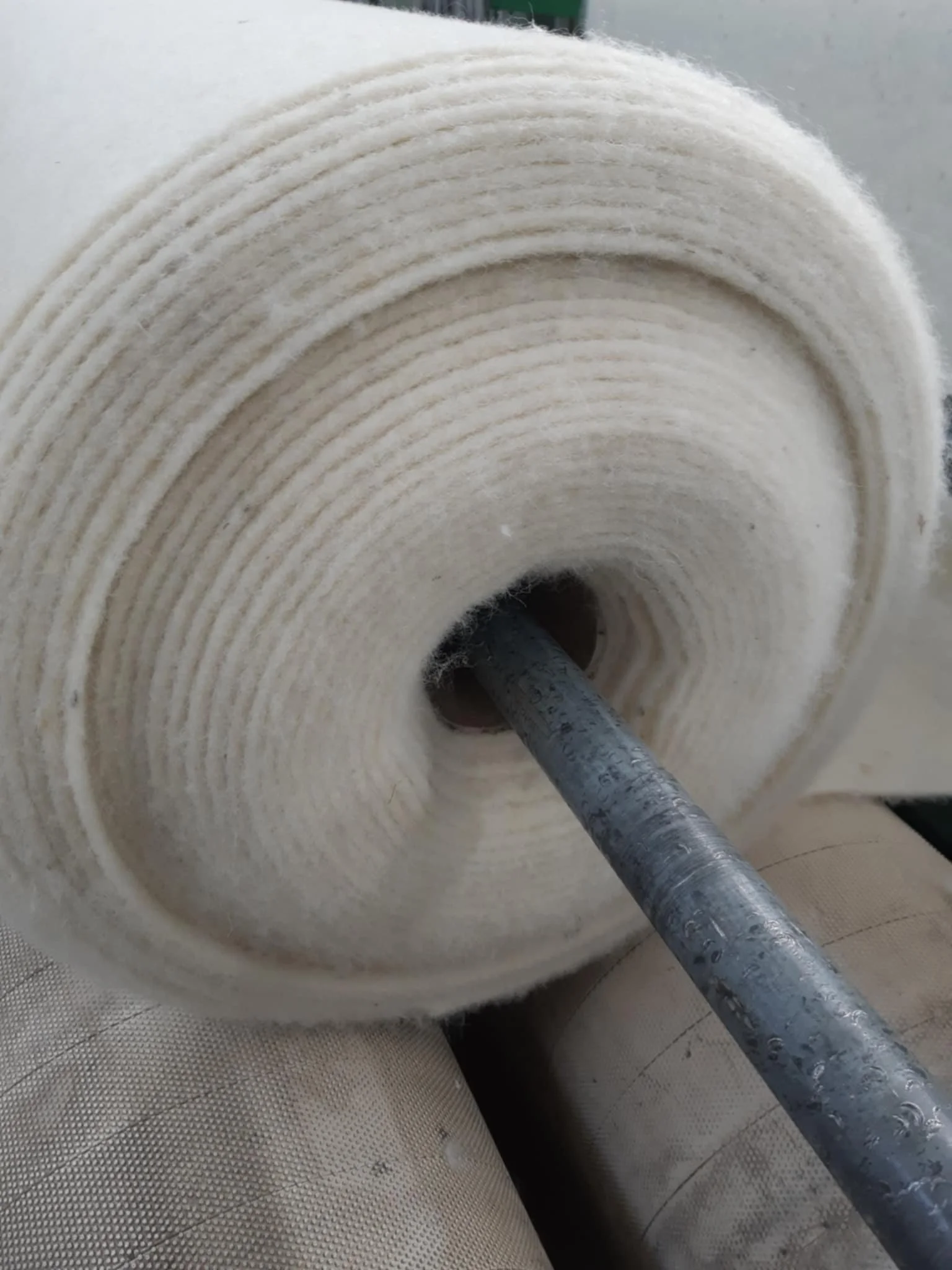
WiseLayer™ wool batting manufactured at Wisewool(™) Te Poi factory New Zealand
Where is New Zealand strong wool used?
Strong wool’s primary commercial applications are in bedding (mattresses, toppers, duvets, pillows), furniture upholstery and insulation. Wisewool(™) supplies WiseLayer™ and WiseFill™ to manufacturers across New Zealand, ASEAN, Australia, Dubai, the United States, Latin America and Europe from its Te Poi factory.
As consumers and regulators increasingly reject synthetic materials due to off-gassing, microplastic shedding, and chemical flame retardant concerns, natural materials with verifiable performance data are gaining market share. Wisewool(™)’s B Corp certification, Land to Market verification, and NZ Fernmark licence provide third-party credibility across global supply chains.
Is Strong Wool the Same as Carpet Wool?
Strong wool has long carried the label of "carpet wool" - and for much of the twentieth century, that association was fair. But the properties that made it durable for carpet - compressional resilience, moisture management and natural fire retardancy - make it equally superior in bedding, mattresses, duvets, pillows, upholstery and insulation. The fibre was never the limitation. The thinking was.
Wisewool™ recognised this early and has invested five generations in the non-woven processing of New Zealand strong wool specifically engineered for sleep and comfort applications - developing WiseLayer™ batting and WiseFill™ loose fill not as carpet industry by-products, but as purpose-built solutions for the global sleep industry. Strong wool is not carpet wool. In the hands of Wisewool™, it never was.
What research is being conducted on strong wool and sleep?
Wisewool(™) is conducting a three-year MPI (Ministry for Primary Industries) co-funded clinical sleep science study (PSGF-251969). This randomised controlled crossover trial uses dual Wellington research centres: the Sleep/Wake Research Centre and the WellSleep Centre. A widely selected group of people are being studied in ‘real life’ situations alongside a clinical situation.
This is the first clinical human trial specifically examining strong wool’s effect on sleep quality. It builds on existing published research: the University of Sydney found older adults fell asleep faster with wool sleepwear under warm conditions, Bangor University (2026) demonstrated wool’s superior moisture transmission and insulation, and CSIRO has documented wool’s VOC absorption properties. The MPI study will add clinical human sleep data to this evidence base - the most comprehensive dataset on wool and sleep performance available globally.
New Zealand strong wool is a high-performance natural fibre with independently verified advantages in compressional resilience, fire safety, moisture management and chemical purity. For bedding manufacturers and consumers seeking natural materials backed by lab data and original clinical research, Wisewool(™)’s strong wool products represent the most comprehensively tested option available.
AUTHOR BIO: Harry Urquhart-Hay is Co-Founder of Wisewool, a fifth-generation New Zealand strong wool company. Wisewool controls the wool journey from 250+ partner farms in Gisborne through to finished product, and is currently conducting a three-year MPI-funded clinical sleep science study. Henry Hansen is CEO of Wisewool with deep expertise in wool fibre science and processing.
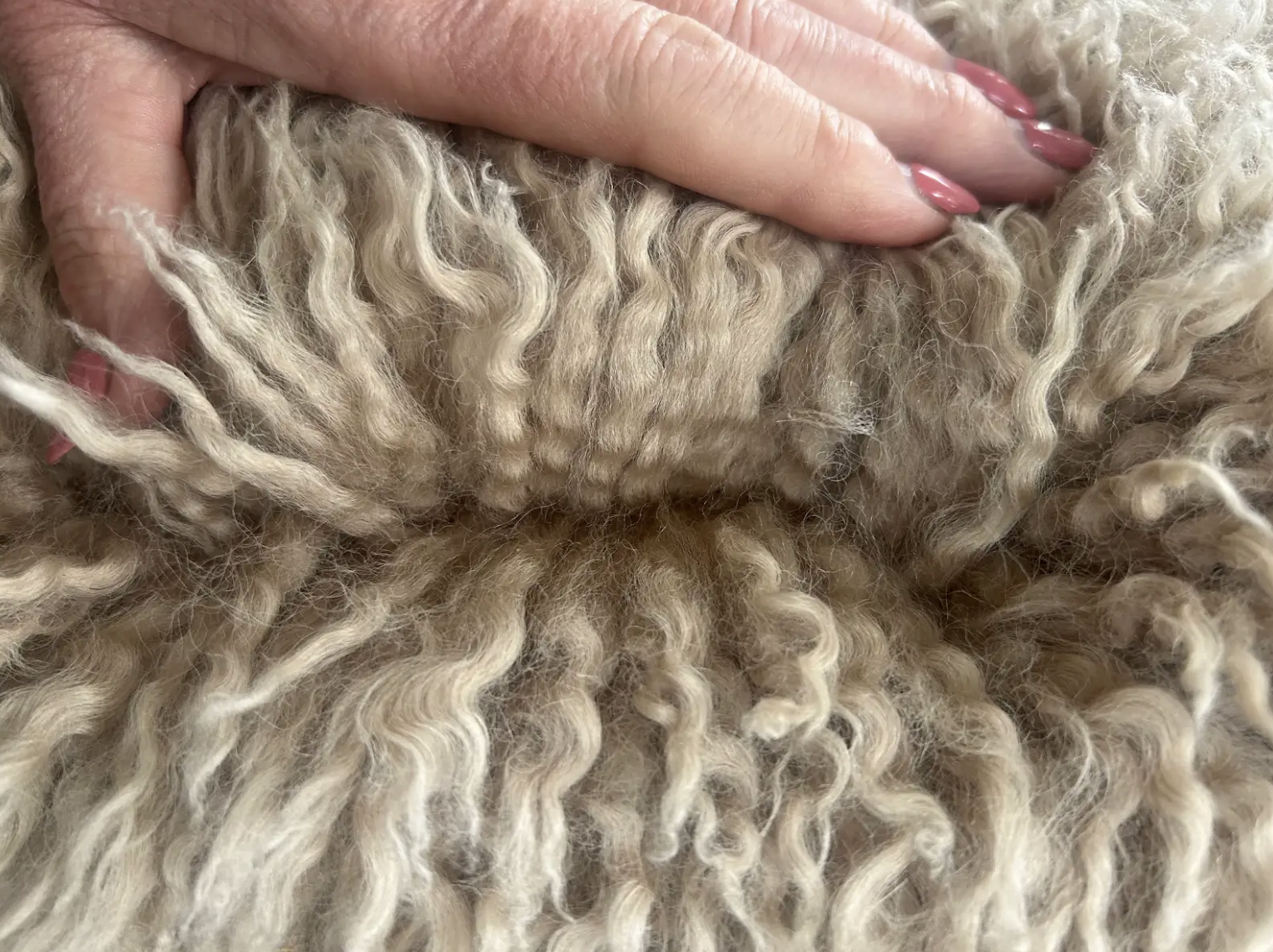
New Zealand strong wool fibre close-up showing 36-39 micron crossbred crimp - Wisewool uses mainly 36-39 micron ensuring even stronger crimp